What Is Afrobeats? A Complete Guide to Nigeria’s Global Sound

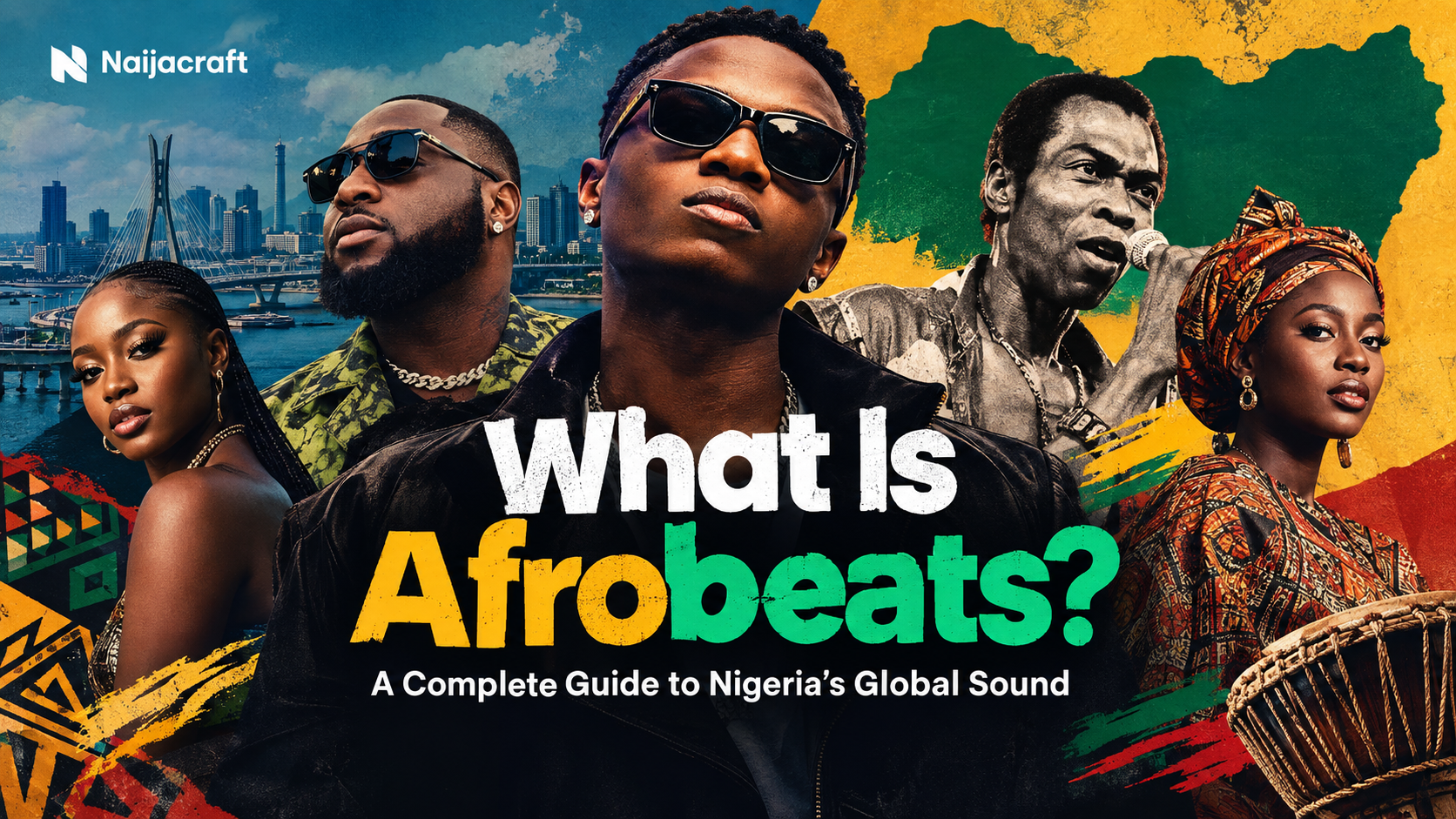
What Is Afrobeats? A Complete Guide to Nigeria’s Global Sound
Afrobeats is one of the most influential sounds to emerge from Africa in the modern era.
From Lagos, Enugu and Accra to London, New York, Toronto and beyond, the sound has become a major part of the global music conversation. Nigerian artists have taken locally rooted sounds to international audiences, while streaming and social media have made it easier than ever for listeners around the world to discover African music.
But what exactly is Afrobeats?
Where did it come from? How is it different from Afrobeat? And why has Nigerian music become so influential globally?
This guide explains the history, sound, evolution and cultural importance of Afrobeats—and why its story is still being written.
Afrobeats in Simple Terms
Afrobeats is a broad contemporary African popular-music movement strongly associated with Nigeria and Ghana.
It combines African rhythms, melodies and musical traditions with influences from genres such as pop, R&B, hip-hop, dancehall, reggae, highlife and electronic music.
There is no single formula for making an Afrobeats song.
One record may have strong highlife influences. Another may sound closer to R&B. Another might incorporate Nigerian street-pop, hip-hop or amapiano.
That flexibility is one of Afrobeats’ greatest strengths.
Rather than remaining fixed to one sound, Afrobeats continues to absorb new influences and evolve with each generation of artists.
Where Did Afrobeats Come From?
To understand modern Afrobeats, it helps to look at the broader history of Nigerian and West African music.
Nigeria has always had a rich musical culture.
Traditional musical forms, highlife, juju, fuji, gospel, Afrobeat, hip-hop and other genres helped create the environment in which contemporary Nigerian popular music developed.
As Nigerian musicians began interacting more heavily with global pop culture, new generations started combining these influences with modern production techniques.
The internet accelerated the process.
Artists could release music digitally, collaborate across borders and reach listeners without depending entirely on traditional radio and television.
Over time, Nigerian popular music developed a stronger international presence.
The sound that audiences increasingly identified as Afrobeats became one of the most successful expressions of that movement.
Afrobeats vs Afrobeat: What’s the Difference?
This is one of the most common questions about African music.
Afrobeats and Afrobeat are not the same thing.
Afrobeat
Afrobeat is a specific musical tradition strongly associated with Nigerian musician and activist Fela Kuti.
Fela combined West African rhythms with jazz, funk and politically charged songwriting to create a distinctive sound that became enormously influential.
Afrobeats
Afrobeats is a much broader contemporary popular-music movement.
It developed decades after the emergence of Fela Kuti’s Afrobeat and incorporates influences from numerous genres.
Afrobeats has certainly been influenced by Afrobeat and other African musical traditions, but the terms should not be used interchangeably.
The simple explanation
Afrobeat is a specific musical tradition.
Afrobeats is a broader contemporary African pop movement.
Understanding this distinction is important when discussing Nigerian music.
Related Naijacraft guide:
Afrobeats vs Afrobeat: What’s the Difference? [Internal link to be added]
What Does Afrobeats Sound Like?
There is no single Afrobeats sound.
However, many Afrobeats records feature some combination of:
African percussion
rhythmic basslines
melodic vocals
danceable grooves
contemporary pop structures
electronic production
R&B influences
hip-hop influences
highlife influences
dancehall or reggae influences
traditional African musical elements
The vocals are often highly melodic, while the production tends to emphasize rhythm and movement.
This combination makes Afrobeats adaptable.
A song can work on a Nigerian dance floor, an international festival stage, a streaming playlist or a short-form video platform.
Why Is Afrobeats So Popular?
There isn’t one explanation for the global rise of Afrobeats.
Several developments happened at the same time.
1. Nigerian artists began reaching international audiences
Artists from Nigeria increasingly built audiences outside the country.
International collaborations, tours, festivals and global media exposure helped introduce Nigerian music to new listeners.
Artists such as Wizkid, Davido, Burna Boy and Tiwa Savage played important roles in the international expansion of Nigerian popular music.
A younger generation—including Rema, Tems, Ayra Starr and Asake—has continued to expand the audience and possibilities of contemporary Nigerian music.
Naijacraft artist links can be added as the corresponding artist profiles become available.
2. Streaming changed music discovery
The internet fundamentally changed how people discover music.
A listener no longer needs to live in Nigeria to discover a Nigerian artist.
A song released by an independent musician in Lagos, Abuja, Port Harcourt, Benin City or another Nigerian city can potentially reach listeners anywhere in the world.
Streaming platforms, playlists, recommendations and social media have made geographic boundaries less important.
This has created opportunities for artists who might previously have struggled to reach audiences outside their immediate communities.
3. Social media changed how songs become popular
A song can now become popular because of a short video, dance, meme, challenge or memorable lyric.
Platforms such as TikTok, Instagram and YouTube have changed the relationship between music and audience discovery.
Sometimes a listener encounters a few seconds of a song before ever hearing the complete record.
That can lead to streams, searches, playlist additions and eventually discovery of the artist’s wider catalogue.
4. African artists are collaborating across borders
Afrobeats increasingly exists within a larger global music ecosystem.
Nigerian artists collaborate with musicians from Africa, Europe, North America, the Caribbean and other regions.
These collaborations introduce artists to new audiences while also allowing different musical traditions to influence one another.
The Nigerian Sound Is Bigger Than Afrobeats
It is important not to reduce Nigerian music to one genre.
Nigeria has an enormous and diverse music culture.
Alongside Afrobeats, listeners encounter:
Afropop
Afro-fusion
Nigerian hip-hop
Street-pop
Highlife
Fuji
Juju
Gospel
R&B
Amapiano-influenced Nigerian music
Traditional and regional musical styles
Some artists move between several of these sounds.
That is why Nigerian music can be difficult to put into strict categories.
An artist may release a pop record today, a street-influenced song tomorrow and an R&B collaboration later.
The boundaries are increasingly fluid.
Afropop, Afro-Fusion and Street-Pop
Several terms frequently appear alongside Afrobeats.
Afropop
Afropop generally describes contemporary African popular music with strong pop influences.
The term can cover a wide range of sounds across the continent.
Afro-Fusion
Afro-fusion describes music that combines African influences with elements from different genres.
The approach allows artists to move freely between sounds rather than remaining inside a single genre.
Nigerian Street-Pop
Street-pop is closely connected to Nigerian youth culture, slang, local experiences and street-oriented musical expression.
It has become an important part of the country’s modern popular-music landscape.
What Does Amapiano Have to Do With Afrobeats?
Amapiano originated in South Africa, but its influence has spread widely across Africa.
Nigerian artists and producers have incorporated amapiano-inspired rhythms, production techniques and the distinctive log-drum sound into Nigerian popular music.
This is a good example of how African music scenes influence one another.
Music does not have to remain within national borders.
A sound can originate in one country, be adopted by artists in another and then develop into something new.
The Nigerian interpretation of amapiano is therefore another example of the continent’s rapidly evolving music culture.
Related Naijacraft guide:
What Is Amapiano? A Complete Guide to the Sound Taking Over African Music [Internal link to be added]
The Rise of a New Generation
Afrobeats continues to evolve because new artists keep challenging the definition of Nigerian popular music.
Today’s generation is experimenting with:
R&B
hip-hop
amapiano
dancehall
electronic music
alternative sounds
traditional African influences
global pop
The result is a much wider musical landscape.
Some artists are focused heavily on the Nigerian market.
Others are building international audiences from the beginning.
Some combine both approaches.
This means the next major sound from Nigeria may not look exactly like the Afrobeats that became internationally popular during the 2010s and early 2020s.
That is part of the excitement.
Afrobeats and Nigerian Culture
Afrobeats is not only about music.
It is also a vehicle for culture.
Songs can carry Nigerian slang, languages, humour, fashion, stories, relationships, social experiences and everyday life to listeners around the world.
For international listeners, a song can become an introduction to Nigerian culture.
For Nigerians and Africans in the diaspora, music can also provide a connection to home.
That cultural role is one reason the growth of Nigerian music matters beyond streaming numbers.
The Global Business of African Music
The growth of Afrobeats is happening alongside a much larger transformation in the music business.
Streaming has made digital distribution central to the modern industry.
Artists can distribute music internationally, build audiences online and use data to understand where their listeners are located.
The global recorded-music industry continues to grow, while Sub-Saharan Africa has become an increasingly important part of the international music market.
For African artists, this creates opportunities—but also greater competition.
Having a good song is no longer the entire job.
Artists increasingly need to understand:
distribution
promotion
audience building
social media
streaming
copyright
royalties
branding
live performance
collaboration
This is one reason music education is becoming increasingly important for independent artists.
What Does Afrobeats Mean for Independent Nigerian Artists?
The growth of Afrobeats has created a much larger potential audience for Nigerian musicians.
An independent artist does not necessarily need to wait for a major record label before releasing music.
Digital distribution can make international release possible.
Social media can help build an audience.
Streaming can provide another route to discovery.
And music platforms can help listeners find artists they might never encounter through traditional media.
However, access does not guarantee success.
The number of artists releasing music has also increased dramatically.
Standing out therefore requires more than simply uploading a song.
Artists need strong music, consistent branding, audience engagement, effective promotion and a long-term strategy.
That is an important part of the new Nigerian music economy.
The Future of Afrobeats
The future of Afrobeats will probably be defined by experimentation.
We are likely to see more combinations of:
Afrobeats + R&B
Afrobeats + Amapiano
Afrobeats + Hip-Hop
Afrobeats + Dancehall
Afrobeats + Electronic Music
and many combinations that do not yet have names.
The next generation of artists will also continue using technology differently.
Social media, streaming recommendations, artificial intelligence, digital distribution and new forms of fan engagement are already changing how music is created, marketed and consumed.
The important thing is that African artists are no longer simply participating in the global music industry.
They are increasingly helping shape it.
Frequently Asked Questions About Afrobeats
Is Afrobeats Nigerian music?
Afrobeats is strongly associated with Nigeria and Ghana, with Nigeria playing a particularly important role in its global development. However, the wider movement includes artists and influences from across Africa and beyond.
Is Afrobeats the same as Afrobeat?
No. Afrobeat is a specific musical tradition strongly associated with Fela Kuti, while Afrobeats describes a broader contemporary African popular-music movement.
Who started Afrobeats?
There is no single person who can accurately be described as the sole founder of Afrobeats. The modern sound developed through the work of many West African artists, producers and musicians over several decades.
Who are some famous Afrobeats artists?
Some internationally recognized Nigerian artists associated with the modern Afrobeats movement include Wizkid, Davido, Burna Boy, Tiwa Savage, Rema, Tems, Ayra Starr and Asake.
The wider scene contains many more established and emerging artists.
Is Amapiano Afrobeats?
No. Amapiano originated in South Africa and is its own musical genre. However, Nigerian artists have incorporated amapiano influences into contemporary Nigerian music.
Why is Afrobeats popular around the world?
Its international growth has been supported by Nigerian artists, streaming, social media, international collaborations, live performances and the ability of the music to combine African identity with globally familiar musical influences.
Discover Afrobeats on Naijacraft
The best way to understand Afrobeats is to listen to it.
Naijacraft is built around music discovery—helping listeners find songs, artists, albums and playlists while giving independent and emerging musicians another place to be discovered.
Explore Afrobeats
Afrobeats Songs
[Naijacraft Afrobeats Collection]
Afrobeats Playlists
[Naijacraft Afrobeats Playlists]
More Music Discovery
[Naijacraft Music Discovery]
Final Thoughts
Afrobeats is more than a genre label.
It represents a constantly evolving part of African popular culture.
Its story includes Nigerian musical traditions, Ghanaian influences, global pop culture, technology, streaming, social media and generations of artists who continue to experiment with sound.
What began as a regional musical movement has become part of the global music conversation.
But perhaps the most interesting part is that Afrobeats is still evolving.
New artists are arriving.
New sounds are emerging.
New audiences are discovering African music every day.
And the next chapter of the story may come from an artist who has not yet become famous.
That is why music discovery matters.
Discover the next sound. Discover the next artist. Discover Nigerian music on Naijacraft.


