Afrobeats vs Afrobeat: Understanding the Important Difference
Afrobeat and Afrobeats are often confused, but they represent distinct chapters in African music history. Explore the origins of Fela Kuti's Afrobeat, the emergence of modern Afrobeats in Nigeria and Ghana, and how their rhythms, cultural influences and artistic identities compare.

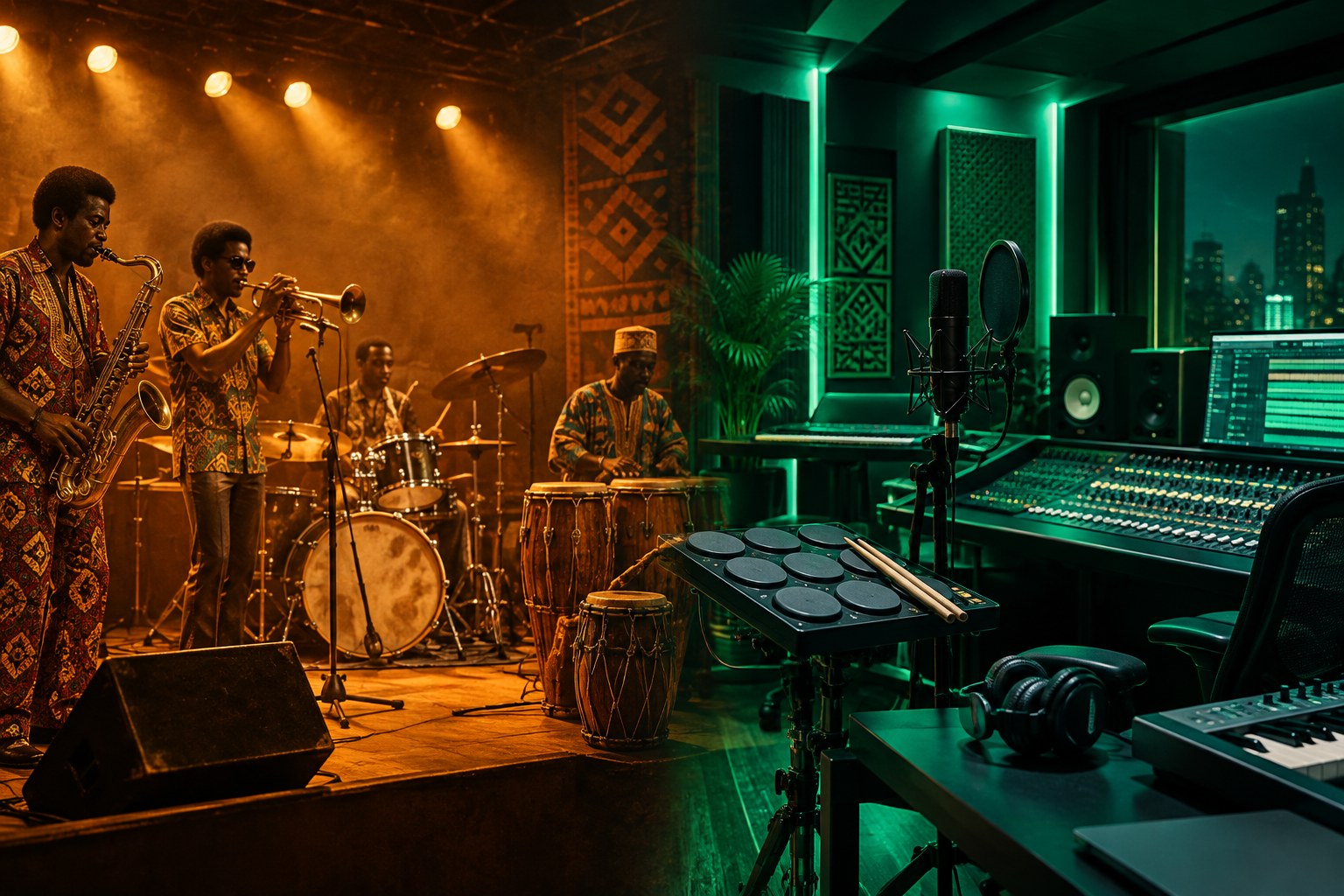
There is a common misunderstanding in conversations about African music: many people use Afrobeat and Afrobeats as though they mean exactly the same thing.
The difference appears small. One word ends with an “s,” while the other does not. But behind that single letter are two distinct musical histories.
Afrobeat is associated with Nigerian music pioneer Fela Anikulapo Kuti, drummer Tony Allen and the revolutionary sound that emerged during the late 1960s and 1970s.
Afrobeats, meanwhile, is a broad name for contemporary West African popular music, particularly sounds emerging from Nigeria and Ghana.
Both have helped shape African music, but they developed in different circumstances, use different musical approaches and represent different generations of creativity.
Understanding the distinction helps listeners appreciate the history behind the music they enjoy today.
What Is Afrobeat?
Afrobeat is a musical genre developed in Nigeria during the late 1960s and 1970s, principally through the work of Fela Kuti and his collaborators, including influential drummer Tony Allen.
The music combines West African highlife, jazz, funk and African rhythmic traditions into powerful, extended arrangements.
Rather than following the conventional structure of short popular songs, classic Afrobeat recordings often unfold over lengthy instrumental passages.
Bass guitars establish repeating grooves, drums create interlocking rhythms, guitars introduce rhythmic patterns, and brass instruments contribute distinctive melodies.
Vocals frequently enter after the instrumental arrangement has developed.
Afrobeat was also closely connected to political expression.
Fela used his music to challenge military rule, corruption, social inequality and abuses of political authority in Nigeria.
His recordings became both musical performances and powerful statements about society.
However, Afrobeat should not be understood only as protest music. Its musical innovations, dance rhythms and distinctive arrangements remain equally important to its identity.
How Fela Kuti and Tony Allen Helped Shape Afrobeat
Fela Kuti was born in 1938 and became one of Nigeria’s most influential musicians.
His artistic development brought together musical experiences from Nigeria, Britain and the United States.
During his career, he drew inspiration from highlife, jazz, soul and funk while developing a distinctively African musical expression.
An essential contributor to this process was Tony Allen, who served as drummer and musical director in Fela’s Africa ’70 band.
Allen’s drumming was remarkable for its ability to maintain several rhythmic patterns simultaneously.
Instead of relying on straightforward beats, his playing created a layered relationship between drums, bass, guitars and percussion.
This became one of Afrobeat’s defining musical characteristics.
Although Fela is widely celebrated as the genre’s principal pioneer, Allen’s contribution should not be overlooked. Their collaboration was central to the formation of the classic Afrobeat sound.
Together with other musicians, they helped create a genre that continues to influence performers around the world.
What Does Classic Afrobeat Sound Like?
Several musical characteristics help distinguish Afrobeat from other genres.
Extended Instrumental Arrangements
Classic Afrobeat compositions can run considerably longer than conventional pop songs.
Instrumental sections gradually introduce and develop musical ideas before the principal vocal passages begin.
This gives individual instruments room to interact and allows the groove to develop over time.
Prominent Horn Sections
Saxophones, trumpets and other brass instruments are important features of many Afrobeat arrangements.
They introduce melodic themes, reinforce rhythmic patterns and create dramatic musical changes.
Layered Percussion and Rhythm
Afrobeat’s rhythmic foundation involves multiple instruments working together.
The drums, percussion, guitars and bass establish interlocking patterns that make the music rhythmically rich without requiring constant changes in tempo.
Social and Political Commentary
Fela frequently addressed issues affecting Nigerian society.
His songs challenged political leaders, questioned abuses of power and encouraged public reflection.
The lyrics were often delivered in Nigerian Pidgin and other accessible forms of expression.
These characteristics make classic Afrobeat recognisable even decades after its development.
What Is Afrobeats?
Afrobeats is an umbrella term for contemporary popular music associated primarily with Nigeria, Ghana and their diaspora communities.
The sound developed through the evolution of African popular music during the 2000s and became increasingly visible internationally during the 2010s.
Unlike classic Afrobeat, Afrobeats does not follow one strictly defined instrumental arrangement.
It encompasses multiple musical approaches influenced by highlife, hiplife, hip-hop, R&B, dancehall, Nigerian street music, Afropop and electronic production.
Some recordings emphasise percussion-heavy dance rhythms, while others feature gentle melodies, romantic songwriting or alternative production styles.
Afrobeats is therefore better understood as a broad contemporary musical movement than as one rigid sound.
Artists such as Wizkid, Davido, Tiwa Savage and many others have contributed to its development and international recognition.
Although some musicians accept the Afrobeats label, others prefer descriptions that more specifically reflect their individual artistic identities.
Where Did the Name Afrobeats Come From?
The music now described as Afrobeats emerged from existing Nigerian and Ghanaian popular music scenes.
Artists, producers and DJs were developing new sounds long before the term gained widespread international recognition.
During the early 2010s, British-Ghanaian broadcaster DJ Abrantee helped popularise the name through radio programming and events in the United Kingdom.
The term provided an accessible way to describe contemporary music coming from Nigeria and Ghana to audiences unfamiliar with its various local styles.
However, the precise origin of the word remains debated.
Although DJ Abrantee has frequently been credited with creating the name, he later disputed the suggestion that he personally invented it.
It is therefore more accurate to describe him as an influential figure in popularising the label rather than its undisputed creator.
Most importantly, the name Afrobeats did not mark the beginning of the music itself.
It helped bring together and promote musical styles that already existed.
Afrobeats vs Afrobeat: The Main Differences
The easiest way to understand the distinction is to compare the genres across several characteristics.
| Feature | Afrobeat | Afrobeats |
|---|---|---|
| Historical emergence | Late 1960s–1970s | 2000s–2010s |
| Main association | Fela Kuti, Tony Allen and their collaborators | Contemporary Nigerian and Ghanaian artists |
| Musical foundations | Highlife, jazz, funk and African rhythms | Afropop, highlife, hiplife, hip-hop, R&B, dancehall and other influences |
| Production style | Often large live bands | Frequently digital and studio-based, but also uses live instruments |
| Song structure | Commonly lengthy, evolving arrangements | Often shorter popular-song structures, with many exceptions |
| Lyrical themes | Frequently political and socially critical | Wide-ranging, including love, celebration, identity and social commentary |
| Classification | A more recognisable musical genre | A broad umbrella for multiple contemporary styles |
These are general distinctions, not absolute rules.
Afrobeat musicians can make shorter songs, while Afrobeats artists can incorporate extensive live instrumentation and politically engaged lyrics.
The difference is best understood through history, musical context and artistic intention.
Is Afrobeats Inspired by Afrobeat?
Yes, but the relationship is more complex than simply calling Afrobeats a modern version of Fela’s music.
Afrobeat helped establish an influential model for combining African musical traditions with international influences.
Fela also demonstrated that African artists could develop distinctive creative identities without abandoning their cultural foundations.
Those ideas remain relevant to contemporary musicians.
However, Afrobeats did not emerge exclusively from Afrobeat.
Highlife, Ghanaian hiplife, Nigerian pop, Yoruba musical traditions, hip-hop, dancehall and other styles contributed significantly to its development.
The two categories are therefore connected through a broader history of African musical experimentation, rather than one being a direct replacement for the other.
Artists and Songs That Help Explain the Difference
Listening to recordings from different periods offers a useful way to understand the distinction.
Classic Afrobeat: Fela Kuti
Fela’s Water No Get Enemy illustrates the layered instrumental arrangements and rhythmic sophistication associated with Afrobeat.
Zombie demonstrates how he combined distinctive musical structures with political criticism.
Expensive Shit offers another example of the extended grooves and instrumental interplay that defined much of his work.
These recordings provide a foundation for listeners exploring classic Afrobeat.
Contemporary Afrobeat: Femi Kuti and Seun Kuti
Afrobeat did not disappear with Fela’s death in 1997.
Musicians including Femi Kuti and Seun Kuti have continued developing and performing music connected to the tradition.
Their work demonstrates that Afrobeat remains an active genre rather than simply a historical category.
Contemporary Afrobeats: Wizkid, Davido and Tiwa Savage
For an introduction to Afrobeats, listeners can explore Wizkid’s Ojuelegba, Davido’s Fall and Tiwa Savage’s All Over.
These recordings demonstrate different melodic, rhythmic and production approaches within the broader contemporary West African pop landscape.
They also illustrate how Afrobeats can incorporate influences from several genres without following classic Afrobeat’s extended live-band format.
Why the Distinction Matters
Understanding the difference between Afrobeat and Afrobeats is more than a matter of spelling.
It helps preserve the history of African music.
When every contemporary Nigerian recording is described as Afrobeat, the distinct contributions of Fela Kuti, Tony Allen and their collaborators can become obscured.
Similarly, treating all modern African popular music as Afrobeats may overlook the independent histories of Amapiano, Bongo Flava, Soukous and other genres.
Accurate descriptions allow listeners to discover musical traditions on their own terms.
They also help journalists, music platforms, creators and cultural institutions document artists more responsibly.
For independent musicians, understanding genre classifications can improve the way they present their recordings to audiences, although artistic identity should not be reduced to a marketing label.
How Afrofusion Fits Into the Conversation
Another term listeners frequently encounter is Afrofusion.
Afrofusion describes a flexible creative approach that brings African musical foundations together with influences such as R&B, reggae, dancehall, hip-hop and other genres.
Burna Boy is particularly associated with this description.
An artist’s music may be described as Afrofusion while also appearing within the wider Afrobeats landscape.
This overlap illustrates why African music cannot always be neatly divided into separate categories.
For a closer examination of this musical approach, read our guide: What Is Afrofusion? A Complete Guide to the Sound Blending Africa and the World.
The Continuing Legacy of Both Sounds
Afrobeat and Afrobeats represent different chapters in African music, but both demonstrate the continent’s capacity for musical innovation.
Afrobeat established a powerful musical language through complex rhythms, live arrangements and socially engaged expression.
Afrobeats reflects the ongoing evolution of contemporary West African popular music, shaped by changing technology, cultural exchange and the creativity of new generations.
One is not simply the older version of the other.
Both deserve recognition for their distinctive histories and contributions.
Understanding those differences makes listening more rewarding and creates space for the many other genres that form Africa’s musical landscape.
Discover African Music on Naijacraft
Whether you are exploring classic Afrobeat, discovering new Afrobeats releases or searching for independent African artists, understanding musical history can deepen your appreciation of every recording.
At Naijacraft, we believe music discovery should celebrate the diversity of African sounds, the creativity of artists and the stories behind the music.
Explore new releases, discover emerging talent and support the creators shaping African music.
Visit Naijacraft.com and continue your music discovery journey.
Frequently Asked Questions
Is Afrobeat the same as Afrobeats?
No. Afrobeat is the genre developed by Fela Kuti and his collaborators during the late 1960s and 1970s. Afrobeats refers broadly to contemporary popular music associated mainly with Nigeria, Ghana and their diaspora communities.
Who created Afrobeat?
Fela Kuti was the principal pioneer of Afrobeat, while Tony Allen and other collaborators made essential contributions to its development.
Who created Afrobeats?
There is no single universally accepted creator of Afrobeats. The music developed through several African popular music traditions. DJ Abrantee played an important role in popularising the name internationally.
Is Burna Boy an Afrobeat or Afrobeats artist?
Burna Boy has described his music as Afrofusion. His recordings are also frequently discussed within the broader contemporary Afrobeats movement. He should not automatically be classified as a classic Afrobeat musician.
Is Afrobeat still popular today?
Afrobeat remains an active musical tradition. Artists such as Femi Kuti and Seun Kuti continue to perform and develop music connected to the genre.
Why does Afrobeats have an “s”?
The plural term became popular as a broad label for multiple contemporary West African popular music styles. It distinguishes that movement from the older Afrobeat genre, although the two share historical and musical connections.