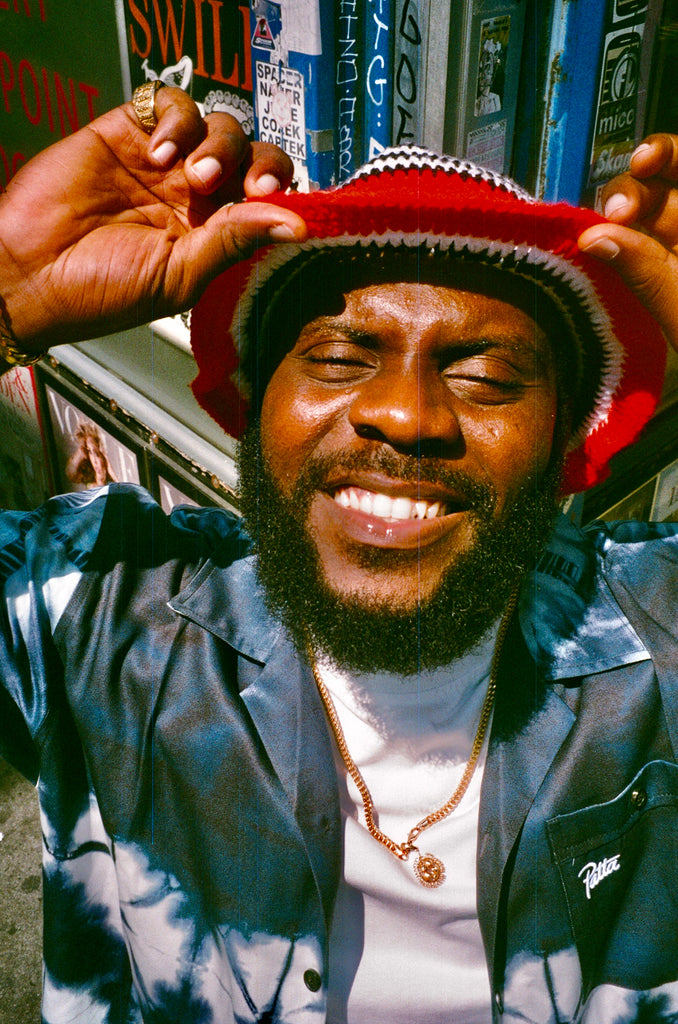
Phyno Biography: Early Life, Music Career, Albums and the Evolution of Igbo Rap
Explore Phyno's journey from music production in Enugu to becoming a leading figure in indigenous Nigerian hip-hop. Discover his six solo studio albums, career-defining songs, awards, Penthauze Music, international collaborations and lasting influence on the evolution of Igbo rap.


Featured photograph: Phyno and Don Jazzy performing at the MTV Africa Music Awards, Durban, South Africa, 7 June 2014. Photo: Akidjoh / Wikimedia Commons, licensed under CC BY-SA 4.0. Image orientation adjusted by WordPress.
Long before becoming one of Nigeria’s most recognizable rappers, Phyno was developing his musical abilities behind the scenes as a record producer in Enugu.
Born Chibuzor Nelson Azubuike, the Nigerian rapper, singer, songwriter and music producer has built a career distinguished by his commitment to indigenous-language music, lyrical expression and the combination of hip-hop with African musical traditions.
Phyno’s biography at a glance
| Personal information | Details |
|---|---|
| Full name | Chibuzor Nelson Azubuike |
| Stage name | Phyno |
| Other professional names | Phyno Fino, Ezege |
| Date of birth | 9 October 1986 |
| Age | 40 years, as of November 2026 |
| Place of birth | Enugu, Nigeria |
| State of origin | Anambra State |
| Nationality | Nigerian |
| Occupation | Rapper, singer, songwriter, record producer |
| Musical genres | Hip-hop, Igbo rap, Afropop, highlife |
| Languages used in music | Igbo, English, Nigerian Pidgin |
| Higher education | Institute of Management and Technology, Enugu |
| Course of study | Public Administration |
| Early professional career | Music production |
| Breakthrough single | Ghost Mode, featuring Olamide |
| Debut solo studio album | No Guts No Glory (2014) |
| Record label | Penthauze Music |
| Solo studio albums | Six |
| Collaborative studio albums | One — 2 Kings with Olamide |
| Latest studio album | Let That Sink In (LTSI), 2026 |
Early life and production career
Phyno was born on 9 October 1986 and grew up in Enugu, southeastern Nigeria.
Although his family originates from Anambra State, Enugu played a particularly important role in shaping his childhood and musical development.
In an interview published by The Nation in 2015, Phyno identified the Abakpa area of Enugu as part of his upbringing.
Phyno attended school in Enugu before pursuing higher education at the Institute of Management and Technology, commonly known as IMT.
He studied Public Administration, graduating before becoming nationally recognized as a recording artist.
During his formative years, he developed an interest in musical instruments, including the drums and piano.
The stage name Phyno is generally associated with the word phenomenal.
Before achieving mainstream recognition as a rapper, Phyno spent several years working as a record producer.
His production career began during the early 2000s.
In interviews discussing this period, Phyno has identified artists including Mr. Raw, formerly known as Nigga Raw; J. Martins; Bracket; Ruggedman; Timaya; and M.I Abaga.
Phyno’s transition into rapping was a gradual professional development rather than an immediate change of direction.
In his 2015 interview with The Nation, he explained that approximately eight years passed between the beginning of his musical journey and the release of his first single as an artist.
He began developing his recording identity more seriously around 2010 and 2011.
He initially experimented with English-language rap before increasingly incorporating Igbo into his recordings.
Breakthrough and career development
In 2012, Phyno released Ghost Mode, featuring Nigerian rapper Olamide.
The collaboration brought together two different indigenous-language rap traditions.
Phyno performed with his recognizable Igbo-language delivery, while Olamide incorporated Yoruba into his performance.
The recording helped establish Phyno as a nationally recognized rapper and prepared the way for his debut studio album.
Phyno released his debut studio album, No Guts No Glory, in March 2014.
It combined hip-hop production with Igbo-language rap, Nigerian Pidgin, contemporary African rhythms and melodic vocal performances.
Among its significant recordings were Ghost Mode, Man of the Year (Obago), Parcel, Alobam, O Set and Authe (Authentic).
Its energetic vocal delivery and confident artistic expression helped establish his reputation within Nigerian hip-hop.
Alobam became closely associated with Phyno’s cultural identity and expressions of friendship and loyalty.
Following the success of their earlier collaborations, Phyno and Olamide released the joint album 2 Kings in 2015.
The project represented an important example of cooperation between two prominent indigenous-language Nigerian rappers.
Among the project’s notable songs were Confam Ni, Cypher and Ladi.
Phyno released his second solo studio album, The PlayMaker, on 1 November 2016.
Its musical direction incorporated highlife, melodic singing, contemporary Afropop and elements of gospel-inspired expression.
Notable recordings included Fada Fada (Ghetto Gospel), Connect, Pino Pino and E Sure for Me.
Fada Fada, featuring Olamide, became one of Phyno’s most commercially recognizable recordings.
The song won Song of the Year at the 2016 Headies.
Phyno released his third solo studio album, Deal With It, on 4 September 2019.
Its collaborators included Davido, Olamide, Don Jazzy, Teni, Runtown, Falz, Phenom and other established Nigerian musicians.
Among its notable recordings were Deal With It, Speak Life (On God), Ride for You, Ka Anyi Na Ayo and Get the Info.
Phyno released his fourth solo studio album, Something to Live For, in November 2021.
Its collaborators included Olamide, Flavour, The Cavemen, Peruzzi and American rapper D Smoke.
In 2023, Phyno released Do I, a recording that became an important part of his contemporary musical resurgence.
Later that year, a remix featuring Burna Boy introduced another dimension to the recording.
Phyno released his fifth solo studio album, Full Time Job, on 4 October 2024.
The album featured collaborations with Burna Boy, Flavour, Cheque, Fave, Johnny Drille, ArrDee, Chip and NSG.
Among its notable recordings were It’s Nothing, Back Outside, Nwayo Nwayo, Anthem Ndi Eze, Time of My Life, Eyes on Dem and Men Don Show Face.
According to TurnTable Charts, the album reached number two and subsequently earned Gold certification.
On 30 October 2026, Phyno released his sixth solo studio album, Let That Sink In (LTSI).
The album features collaborations with Seyi Vibez, Wande Coal, Oxlade, Lojay, Fireboy DML, Chike and Jeriq.
These appearances bring together different generations of Nigerian musicians, including artists working within melodic Afropop, indigenous rap and contemporary street music.
Igbo rap, Penthauze and musical legacy
Phyno’s music draws from several distinct traditions.
His artistic identity is primarily associated with hip-hop and indigenous Igbo rap, although his recordings also incorporate highlife, contemporary Afropop, R&B, dance music and gospel-inspired elements.
His rap performances frequently employ Igbo expressions, conversational phrasing, wordplay and cultural references.
The influence of highlife is particularly important in understanding his musical development.
Before Phyno became nationally recognized, Mr. Raw had already helped demonstrate the creative and commercial possibilities of rapping in Igbo.
His recordings combined indigenous linguistic expression with hip-hop and Nigerian Pidgin, helping establish an audience for this musical approach.
Phyno has publicly acknowledged Mr. Raw’s influence on his professional development.
Phyno subsequently developed his own approach to indigenous hip-hop.
In a 2013 interview with BellaNaija, he acknowledged his connection to Mr. Raw while explaining that their individual approaches to rap were different.
Phyno should therefore be recognized as a major popularizer and innovator of contemporary Igbo rap, rather than being incorrectly identified as its sole inventor.
The continued development of indigenous hip-hop can also be observed through the work of subsequent artists.
Through Penthauze Music, he has participated in developing professional opportunities for younger recording artists.
One of the most prominent artists associated with Penthauze Music is Cheque, whose real name is Akanbi Bamidele Brett.
Cheque joined the label in February 2019.
Phyno’s support for younger musicians is not limited to artists formally associated with Penthauze.
He served as executive producer of Jeriq’s 2024 album King, having previously collaborated with him on the remix of Remember.
These activities demonstrate his contribution to maintaining connections between established and emerging southeastern Nigerian musicians.
Phyno’s contribution to the development of African entertainment also includes his Phynofest concert series.
Established in 2015, the event created a platform for major live performances in southeastern Nigeria.
Nigeria’s commercial music industry has traditionally concentrated many major professional opportunities in Lagos. Phynofest demonstrated that southeastern cities could also support large entertainment events involving nationally recognized musicians.
The event provided opportunities for local entertainment businesses, promoters, performers and music audiences.
Language plays an important role in Phyno’s artistic identity.
For example, Grateful, from his 2024 album Full Time Job, draws from Kporo Ya Isi Na Ala by Njideka and Gozie Okeke.
In an interview with OkayAfrica, Phyno explained that permission for the sample had been obtained before recording the song.
His achievements demonstrate that an artist can develop a nationally recognized career while maintaining a strong connection to a regional language and cultural identity.
Artists such as Mr. Raw helped establish earlier foundations, while Phyno expanded the visibility and commercial possibilities of Igbo-language rap. Subsequent musicians continue developing the tradition through their own artistic approaches.
Phyno’s complete major discography
Phyno has six solo studio albums and one major collaborative studio album as of November 2026.
Solo studio albums
| Year | Album | Historical significance |
|---|---|---|
| 2014 | No Guts No Glory | Established his mainstream career as an indigenous-language rapper. |
| 2016 | The PlayMaker | Expanded his artistic identity through highlife, singing and Afropop. |
| 2019 | Deal With It | Reinforced his hip-hop foundations while maintaining commercial versatility. |
| 2021 | Something to Live For | Explored musical maturity, faith and personal reflection. |
| 2024 | Full Time Job | Celebrated artistic longevity through local and international collaborations. |
| 2026 | Let That Sink In (LTSI) | Continued his musical evolution through indigenous expression and contemporary collaborations. |
Collaborative studio album
| Year | Album | Collaborating artist |
|---|---|---|
| 2015 | 2 Kings | Olamide |
Selected singles and other significant recordings
| Year | Recording | Classification |
|---|---|---|
| 2012 | Ghost Mode | Single featuring Olamide |
| 2013 | Man of the Year (Obago) | Single |
| 2014 | Alobam | Album recording |
| 2014 | O Set | Collaboration with P-Square |
| 2015 | Connect | Single |
| 2016 | Fada Fada | Single featuring Olamide |
| 2017 | If To Say | Single |
| 2018 | N.W.A | Collaboration with Wale |
| 2020 | High Way | DJ Kaywise collaboration |
| 2021 | Bia | Single |
| 2023 | Do I | Single |
| 2023 | Do I (Remix) | Collaboration with Burna Boy |
| 2024 | Time of My Life | Collaboration with ArrDee |
| 2026 | Healing | Album promotional single |
This discography documents his major albums and selected recordings rather than every guest appearance, remix or production credit accumulated throughout his career.
Phyno’s awards and achievements
Phyno has received recognition from several entertainment institutions throughout his career.
His achievements are particularly significant because they demonstrate that an artist strongly associated with indigenous-language hip-hop can compete successfully across Nigeria’s broader popular music industry.
Selected verified awards
| Year | Award institution | Category | Recording | Result |
|---|---|---|---|---|
| 2013 | The Headies | Best Collaboration | Ghost Mode featuring Olamide | Won |
| 2013 | The Headies | Best Rap Single | Man of the Year (Obago) | Won |
| 2013 | Nigeria Entertainment Awards | Best Collaboration | Ghost Mode | Won |
| 2016 | The Headies | Song of the Year | Fada Fada featuring Olamide | Won |
The official Headies records confirm that both Ghost Mode and Man of the Year received awards at the 2013 ceremony.
Some secondary biographies incorrectly associate these victories with the 2012 Headies. The official awards database has been prioritized to resolve that discrepancy.
This is a selected list of documented victories rather than an exhaustive count of every nomination and award received throughout his career.
Commercial performance and music certifications
Phyno’s continued commercial relevance is reflected in the performance of recordings released across different stages of his career.
On 10 November 2026, TurnTable Charts published an assessment of his catalogue and reported the following achievements:
| Recording | Reported chart peak | Certification |
|---|---|---|
| High Way — DJ Kaywise featuring Phyno | No. 2 | Platinum |
| Do I (Remix) — featuring Burna Boy | No. 6 | Platinum |
| Grateful | No. 7 | Silver |
| Time of My Life — with ArrDee | No. 8 | — |
| Egedege — with Larry Gaaga and collaborators | No. 10 | Gold |
| Full Time Job | No. 2 | Gold |
These achievements relate to the Nigerian chart and certification data reported by TurnTable. They should not be confused with American RIAA or British BPI certifications.
Recent career developments: 2024–2026
Full Time Job and international collaborations
The release of Full Time Job in October 2024 introduced another period of international collaboration.
His recordings with British artists ArrDee, Chip and NSG demonstrated his continuing interest in connecting Nigerian music with contemporary international hip-hop.
The project also maintained strong connections to his Nigerian musical foundations through collaborations with Flavour, Burna Boy and Cheque.
Let That Sink In and the next stage of his career
The release of Let That Sink In on 30 October 2026 marked the arrival of his sixth solo studio album.
The project explores faith, personal relationships, gratitude, ambition and social experiences.
Its collaboration with Jeriq on Ije Enu is particularly relevant to the history of Igbo rap, connecting two generations of southeastern Nigerian hip-hop.
Songs such as 20 Years to Come and Chukwu Okike also illustrate his continued willingness to explore subjects beyond conventional entertainment themes.
As of 24 November 2026, Let That Sink In remains his latest verified solo studio album.
Discover Phyno’s music on Naijacraft
Phyno’s extensive catalogue provides an opportunity to explore the relationship between Nigerian hip-hop, indigenous music, highlife and contemporary Afropop.
Explore these recordings on Naijacraft:
- Full Time Job — full album
- Do I
- Anthem Ndi Eze
- Back Outside featuring Cheque
- Time of My Life featuring ArrDee
- Men Don Show Face featuring Flavour
- Grateful
- Sweet Karma featuring Johnny Drille
- Nwayo Nwayo
- Erigga – Up Iweka featuring Phyno
Readers interested in the wider history of African popular music can also explore our P-Square biography, The Evolution of Nigerian Music and How Afrobeats Became a Global Music Movement.
Frequently asked questions
What is Phyno’s real name?
Phyno’s full name is commonly recorded as Chibuzor Nelson Azubuike. Some publications use the alternative spelling Chibuzo.
How old is Phyno?
Phyno was born on 9 October 1986. He is 40 years old as of November 2026.
How did Phyno start his music career?
He began working as a music producer around 2003 before pursuing his career as a rapper and recording artist around 2010 and 2011.
How many albums does Phyno have?
Phyno has six solo studio albums and one major collaborative studio album, 2 Kings, with Olamide, as of November 2026.
What is Phyno’s latest album?
His latest verified studio album is Let That Sink In (LTSI), released on 30 October 2026.
Research references
- AllMusic — Phyno
- The Nation — It took eight years to release my first single
- BellaNaija — 2013 Phyno interview
- Music In Africa — Phyno
- The Headies — 2013 winners
- The Headies — 2016 winners
- The Guardian — Master of Phyne Arts
- Apple Music — Phyno
- Apple Music — The PlayMaker
- Apple Music — Deal With It
- Apple Music — Something to Live For
- Apple Music — Full Time Job
- Apple Music — Let That Sink In
- OkayAfrica — Phyno and Full Time Job
- GQ South Africa — Phyno interview
- Mixtape Madness — In Conversation With Phyno
- Pulse Nigeria — Cheque interview
- Blue Pie Records — Mr. Raw
- The NATIVE — Let That Sink In
- TurnTable Charts — Phyno is HIM
- Wikimedia Commons — Phyno photograph
Research updated: 24 November 2026.
More Related Contents: