Mr. Raw Biography: Early Life, Music Career, Albums and the Rise of Igbo Rap
Explore the life and career of Mr. Raw, formerly known as Dat Nigga Raw. Discover his musical beginnings in Enugu, breakthrough with Obodo, albums, achievements, influence on Phyno and pioneering contribution to Igbo rap.

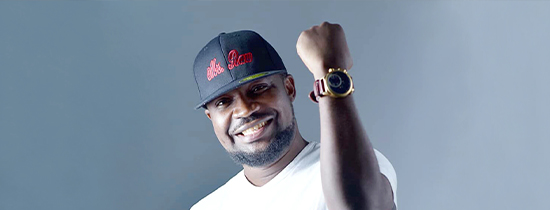
Featured photograph: Mr. Raw, from his official August 2020 promotional press kit. Source: Blue Pie Records / DJ Central Records. Photographer not specified.
Before Phyno, Zoro and other contemporary indigenous rappers achieved mainstream recognition, Mr. Raw was helping establish Igbo-language hip-hop as a commercially viable form of Nigerian popular music.
Born Okechukwu Edwards Ukeje, the rapper formerly known as Dat Nigga Raw became recognized for combining Igbo, Nigerian Pidgin, humour and social commentary with hip-hop.
His breakthrough recording Obodo addressed everyday Nigerian experiences and demonstrated that rap performed in indigenous languages could attract a national audience.
Through his recordings, collaborations and support for younger musicians, Mr. Raw has earned an important place in the history of Nigerian hip-hop.
Mr. Raw’s biography at a glance
| Personal information | Details |
|---|---|
| Full name | Okechukwu Edwards Ukeje |
| Stage name | Mr. Raw |
| Former stage name | Dat Nigga Raw |
| Other professional name | Raw Nwanne |
| Reported date of birth | 1 November 1974 |
| Age | 52 years, as of November 2026 |
| Place of birth | Enugu, Nigeria |
| State of origin | Abia State |
| Hometown | Okoko-Item, Bende LGA |
| Nationality | Nigerian |
| Occupation | Rapper, songwriter, entrepreneur |
| Musical genres | Igbo rap, hip-hop, Afropop |
| Education | Institute of Management and Technology, Enugu |
| Course of study | Business Administration and Management |
| Breakthrough song | Obodo |
| Debut album | Right & Wrong (2005) |
| Record label | Raw Deal Entertainment |
His November 2026 birthday coverage supports the commonly reported birth year of 1974.
Early life and education
Mr. Raw was born and raised in Enugu, although his family originates from Okoko-Item in Bende Local Government Area of Abia State.
Growing up in southeastern Nigeria exposed him to Igbo cultural traditions, local expressions and international hip-hop.
He attended the Institute of Management and Technology (IMT), Enugu, where he studied Business Administration and Management. During his early musical development, he also performed at local events.
His musical influences included American hip-hop performers such as Big Daddy Kane, Redman and Naughty by Nature.
However, rather than simply imitating American rappers, he gradually developed a style that reflected his own linguistic and cultural environment.
How Mr. Raw started his music career
Mr. Raw’s interest in music dates back to the early 1990s.
He initially participated in musical activities for enjoyment without necessarily intending to become a professional recording artist.
Encouragement from friends and family helped him pursue his talent more seriously. He began incorporating Nigerian Pidgin and eventually Igbo into his rap performances.
His ability to combine storytelling, comedy and indigenous expressions helped distinguish him from many Nigerian rappers of that period.
Benson & Hedges Grab the Mic and Star Quest
In 2002, Mr. Raw achieved national recognition through the Benson & Hedges Grab the Mic talent competition, where he won the national final.
That same year, he partnered with comedian Klint Da Drunk to participate in Star Quest.
The pair finished second behind KC Presh, the musical duo comprising Kcee and Presh.
These competitions provided national exposure and helped establish Mr. Raw as an emerging voice in Nigerian entertainment.
Obodo: Mr. Raw’s mainstream breakthrough
Released commercially in 2005, Obodo became one of Mr. Raw’s most recognizable recordings.
Featuring Klint Da Drunk, the song combined rap, humour and observations about Nigeria’s economic and social conditions.
Its conversational delivery made the subject matter accessible to ordinary listeners. Switching between Igbo and Nigerian Pidgin also allowed the recording to reach audiences beyond southeastern Nigeria.
The success of Obodo helped establish a commercial foundation for indigenous rap at a time when English-language performances remained prominent within Nigerian hip-hop.
Its historical significance extends beyond entertainment: the recording helped demonstrate that local languages could communicate contemporary social experiences through rap.
Why Nigga Raw changed his name to Mr. Raw
The rapper originally performed under the name Dat Nigga Raw, sometimes stylized as Dat N.I.G.G.A. Raw.
He explained that the name was derived from an expression meaning the Nigerian guy called Raw.
However, its resemblance to an offensive racial term created difficulties with international broadcasters and music distribution.
Around 2010, he adopted the professional name Mr. Raw to make his brand more accessible across different markets.
The change represented a business and branding decision rather than an abandonment of his musical identity.
Mr. Raw’s albums and discography
Mr. Raw’s major studio albums document different stages of his development as a recording artist.
| Year | Album | Significance |
|---|---|---|
| 2005 | Right & Wrong | Debut album featuring his breakthrough recording Obodo. |
| 2007 | Everything Remains Raw | Consolidated his position within indigenous Nigerian hip-hop. |
| 2010 | End of Discussion | Featured the award-winning music video for O Chukwu. |
| 2012 | The Greatest | Expanded his collaborations and included contributions from 2Baba. |
His debut album also appears in music catalogues under the alternative spelling Right or Wrung. These titles refer to the same project rather than separate albums.
In a 2013 interview with Vanguard, Mr. Raw confirmed that The Greatest contained 15 tracks and discussed the promotion of songs including Asanwa and Forget Swagga.
Notable songs and collaborations
The following recordings represent important examples of Mr. Raw’s musical catalogue.
| Song | Collaborating artist or significance |
|---|---|
| Obodo | Klint Da Drunk |
| Hip Hop Gyration | Early indigenous hip-hop classic |
| O Chukwu | Award-winning music video |
| Spiritual Kongi | Social commentary and humour |
| Ko Gbadun | Duncan Mighty |
| Odi Okay | Phyno |
| Turu Ugo | Phyno, Minista Busta and Ransome |
| Gentleman | Phyno |
| Blessing | Flavour |
| Forget Swagga | Recording from The Greatest |
These collaborations connect different generations of Nigerian musicians and demonstrate Mr. Raw’s versatility across hip-hop and African popular music.
Raw Deal Entertainment and entrepreneurship
Mr. Raw established Raw Deal Entertainment in 2005, following his emergence as a commercially successful recording artist.
The label provided a structure for managing his music business and supporting other performers.
His decision to establish an independent label reflected his desire for greater control over his recordings and professional development.
Beyond music, he has also discussed investing in property and other commercial activities. He described these interests as part of his preparations for long-term financial security beyond his performing career.
Mr. Raw’s influence on Phyno
One of Mr. Raw’s most significant contributions to Nigerian music is his influence on younger indigenous rappers, particularly Phyno.
Before Phyno became nationally recognized, Mr. Raw had already demonstrated that Igbo-language rap could achieve mainstream acceptance.
In 2013, Phyno publicly credited Mr. Raw and M.I Abaga with recognizing his talent and providing opportunities for his professional development.
He also expressed his admiration for Mr. Raw in an interview with BellaNaija.
Their relationship subsequently developed through musical collaborations, including Odi Okay, Gentleman and Turu Ugo.
While Phyno established his own distinctive production style and lyrical identity, Mr. Raw’s earlier achievements helped create an environment in which indigenous hip-hop could flourish.
Read more about this musical relationship in our Phyno biography.
Mr. Raw and the rise of Igbo rap
Mr. Raw’s importance lies partly in his willingness to challenge prevailing assumptions about language in Nigerian hip-hop.
His recordings demonstrated that Igbo expressions, proverbs, humour and everyday conversations could form the foundation of contemporary rap music.
His approach also helped establish southeastern Nigeria as an important creative centre within the national hip-hop industry.
In a 2019 interview published by The Guardian, iLLBLISS acknowledged Mr. Raw’s role in opening opportunities for eastern Nigerian rap music.
Later generations, including Phyno, Zoro, Kolaboy and Jeriq, have continued developing indigenous hip-hop through their individual artistic approaches.
Mr. Raw should therefore be recognized as one of the major pioneers of mainstream Igbo rap, rather than its sole inventor.
Awards and achievements
| Year | Award or competition | Achievement |
|---|---|---|
| 2002 | Benson & Hedges Grab the Mic | National winner |
| 2002 | Star Quest | Runner-up alongside Klint Da Drunk |
| 2010 | Nigeria Music Video Awards | Best Afro Hip-Hop Video for O Chukwu |
Beyond competitive awards, Mr. Raw’s lasting achievement is his influence on the development of indigenous Nigerian hip-hop.
His victory at the 2010 Nigeria Music Video Awards is documented in contemporary coverage of the ceremony by BellaNaija.
Recent career developments and legacy
Mr. Raw has remained an important reference point in discussions about indigenous Nigerian music, even as younger rappers have gained greater commercial visibility.
In November 2022, he delivered a TEDx talk titled How I Made Africa Rap in My Native Tongue, discussing his contribution to indigenous-language hip-hop.
In October 2026, Punch recognized him among Nigerian musicians whose use of indigenous languages helped transform the country’s popular music industry.
He celebrated his 52nd birthday on 1 November 2026, with tributes acknowledging his musical and cultural contributions.
Although his recent musical output is less extensively documented than that of some contemporary Nigerian rappers, his earlier recordings remain important to understanding the evolution of Igbo rap.
Readers interested in this musical evolution can also explore Naijacraft’s articles on:
- Phyno’s biography and the evolution of Igbo rap
- ODUMODUBLVCK’s biography and musical influence
- How Nigerian street music continues to shape popular culture
- The evolution of Nigerian music
Frequently asked questions about Mr. Raw
What is Mr. Raw’s real name?
His full name is Okechukwu Edwards Ukeje.
How old is Mr. Raw?
According to his reported birth date of 1 November 1974, he is 52 years old as of November 2026.
Where is Mr. Raw from?
He originates from Okoko-Item in Bende Local Government Area of Abia State but was born and raised in Enugu.
Why did Nigga Raw change his name?
He adopted the name Mr. Raw around 2010 because the international interpretation of his former stage name created broadcasting and music distribution difficulties.
Who pioneered Igbo rap in Nigeria?
Mr. Raw is widely recognized as one of the principal pioneers of mainstream Igbo rap, having popularized the style during the early 2000s.
Did Mr. Raw influence Phyno?
Yes. Phyno publicly acknowledged Mr. Raw and M.I Abaga as important contributors to his early professional development.
Conclusion
Mr. Raw’s contribution to Nigerian music extends beyond his individual hit songs. By establishing indigenous-language rap as a viable form of mainstream entertainment, he helped create opportunities for subsequent generations of southeastern Nigerian musicians.
His career remains a significant chapter in the history of African hip-hop and the preservation of indigenous cultural identity through contemporary music.
Research references
- Channels Television — Mr. Raw interview
- Music In Africa — Mr. Raw
- Blue Pie Records — Artist biography
- Vanguard — Stage-name change interview
- Vanguard — Mr. Raw and Igbo rap
- BellaNaija — Phyno interview
- The Nation — Phyno, M.I and Mr. Raw
- The Guardian — The making of iLLBLISS
- BellaNaija — 2010 NMVA winners
- Apple Music — Right or Wrung
- Nigerian Entertainment Today — Mr. Raw
- TEDx — Mr. Raw’s presentation
- Punch — Indigenous languages in Nigerian music
- Weekenders Magazine — 52nd birthday tribute
More Related Contents: