The Evolution of Nigerian Music: From Highlife and Afrobeat to Afrobeats
From the dance bands of early highlife to Fela Kuti's politically charged Afrobeat and the international success of contemporary Afrobeats, Nigerian music has undergone a remarkable transformation. Discover the influential genres, pioneering musicians and cultural changes that shaped its journey.

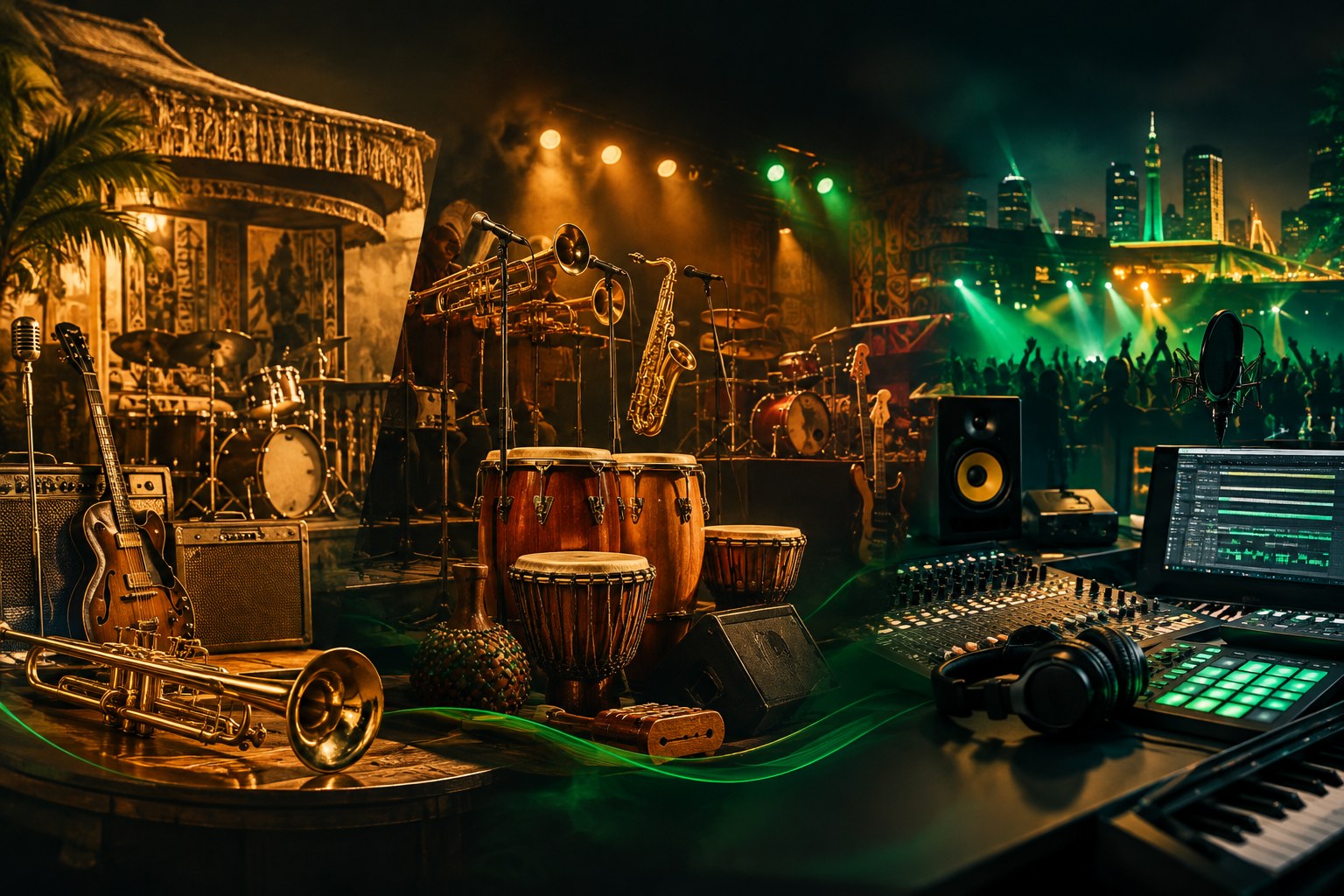
Nigerian music has travelled an extraordinary journey.
Long before Afrobeats became a familiar name on international playlists, Nigerian musicians were developing distinctive sounds that reflected the country’s languages, cultures, political experiences and changing social life.
From the expressive guitar melodies of highlife to the sophisticated rhythms of jùjú, the percussion-driven energy of Fuji and the politically engaged compositions of Fela Kuti, each generation contributed something important.
Today, artists such as Wizkid, Davido, Burna Boy, Tems, Rema and Ayra Starr represent another chapter in this continuing story.
But the evolution of Nigerian music is not simply a journey from old-fashioned songs to modern hits.
It is a history of cultural exchange, musical experimentation and the determination of Nigerian performers to develop original forms of expression.
Understanding that history reveals why Nigerian music has become such an influential part of contemporary African culture.
Nigerian Music Before Highlife
Before modern recording studios, radio stations and commercial music distribution, the communities that now form Nigeria already possessed rich musical traditions.
Music accompanied ceremonies, festivals, religious activities, storytelling, celebrations and everyday life.
Different communities developed distinctive combinations of percussion, singing, string instruments and other musical practices.
Among Yoruba communities, talking drums became important instruments for musical communication and performance.
Across southeastern Nigeria, traditional percussion, vocal traditions and community performance practices influenced later popular music.
Northern Nigerian musical traditions also developed around instruments, praise singing, storytelling and religious expression.
These traditions should not be treated as merely historical. Many continue to exist and influence contemporary performers.
During the early twentieth century, urbanisation and contact with international musical cultures helped create new forms of Nigerian popular music.
Palm-wine music, early jùjú and other styles combined local musical ideas with instruments such as guitars and banjos.
These developments helped establish the conditions from which later Nigerian popular music would grow.
The Rise of Highlife in Nigeria
Highlife became one of the most influential popular music styles in West Africa during the twentieth century.
Its development involved musical exchange across the region, particularly between Ghana and Nigeria.
Highlife brought together African melodic and rhythmic traditions with instruments and arrangements associated with brass bands, jazz and other popular musical forms.
The result was lively, expressive music that became closely associated with social gatherings, dance halls and urban entertainment.
Ghanaian musician E.T. Mensah and his Tempos band played an influential role in popularising dance-band highlife across West Africa.
In Nigeria, performers including Bobby Benson, Victor Olaiya and Cardinal Rex Lawson became important figures in the development of the sound.
Highlife also evolved into distinctive regional styles.
In southeastern Nigeria, musicians such as Chief Stephen Osita Osadebe and Celestine Ukwu developed guitar-led approaches that incorporated Igbo language, local melodies and philosophical storytelling.
Their recordings demonstrated that Nigerian popular music could be contemporary while remaining rooted in regional culture.
Highlife’s importance extends beyond nostalgia. Its guitar patterns, melodic arrangements and performance traditions have continued to influence later generations of Nigerian musicians.
Jùjú Music and the Growth of Yoruba Popular Culture
While highlife was developing, jùjú music became another major force in Nigeria’s entertainment landscape.
Jùjú emerged from Yoruba musical traditions and evolved through the introduction of guitars, percussion and amplified instruments.
Its sound often features interlocking guitar melodies, talking drums, extended performances and lyrics exploring social relationships, spirituality and everyday experiences.
King Sunny Adé and Chief Commander Ebenezer Obey became two of its most influential performers.
Their recordings and live performances demonstrated the musical possibilities of combining traditional rhythmic ideas with modern instrumentation.
King Sunny Adé also helped introduce Nigerian jùjú to international audiences during the 1980s.
Jùjú established an important model for artists seeking to modernise local musical traditions without abandoning their cultural identity.
That principle would remain influential throughout Nigerian popular music.
Fuji Music: Rhythm, Language and Street Culture
Fuji developed along another important path within Yoruba musical culture.
Its roots are associated with wéré, a percussion-based performance tradition connected to Muslim communities during Ramadan.
Musicians gradually expanded its instrumentation, vocal approaches and performance styles.
Alhaji Sikiru Ayinde Barrister became one of Fuji’s most influential pioneers, while artists including Kollington Ayinla and later K1 De Ultimate contributed to its development and popularity.
Fuji places considerable emphasis on percussion, expressive vocals, improvisation and energetic audience participation.
It became an important presence at celebrations and other social gatherings.
Fuji also influenced the rhythmic vocabulary and vocal expression of later Nigerian popular music.
Its history demonstrates why Nigeria’s musical development cannot be reduced to one genre or a single chain of influential artists.
Several musical traditions developed alongside one another, sometimes exchanging ideas and sometimes maintaining distinct identities.
Fela Kuti and the Birth of Afrobeat
One of the most consequential developments in Nigerian music came through Fela Anikulapo Kuti and his collaborators.
During the late 1960s and 1970s, Fela helped develop Afrobeat, a genre combining highlife, jazz, funk and African rhythmic traditions.
Drummer Tony Allen played an essential role in shaping its distinctive rhythmic approach.
Classic Afrobeat often features extended compositions, powerful brass arrangements, layered percussion, repeating basslines and complex instrumental interactions.
But the music also became closely associated with political expression.
Fela challenged military rule, corruption and abuses of authority through recordings that combined danceable rhythms with social criticism.
Songs such as Zombie, Water No Get Enemy and Expensive Shit remain important listening examples.
Afrobeat demonstrated that Nigerian popular music could be artistically ambitious, politically outspoken and internationally influential.
The genre did not disappear with Fela’s death in 1997.
Musicians including Femi Kuti and Seun Kuti have continued developing music within the Afrobeat tradition.
Importantly, Afrobeat is not the same as Afrobeats. The latter term refers to the broader contemporary West African popular music movement that gained international recognition decades later.
The Influence of Reggae, Gospel and Other Nigerian Sounds
The development of Nigerian music also involved genres that do not fit neatly into a highlife-to-Afrobeats timeline.
Reggae developed an important Nigerian audience, with performers such as Majek Fashek and Ras Kimono contributing distinctive voices.
Gospel music evolved through church traditions, choral arrangements and contemporary production.
Nigerian rock, funk, disco and soul also flourished during different periods.
Later, musicians such as Lagbaja and Aṣa explored distinctive combinations of traditional influences, jazz, soul and popular music.
These parallel developments helped make Nigeria’s music culture unusually diverse.
Rather than replacing one another completely, different genres continued to coexist and influence new musical approaches.
The 1990s and 2000s: Nigerian Hip-Hop and Modern Pop
The growth of contemporary Nigerian hip-hop and pop during the 1990s and 2000s created another major turning point.
Artists increasingly combined hip-hop, R&B, dancehall and international pop production with Nigerian languages, rhythms and everyday experiences.
Performers including The Remedies, Eedris Abdulkareem, Weird MC and others helped establish new approaches to urban popular music.
Groups such as Plantashun Boiz and P-Square contributed to the growing popularity of Nigerian R&B and pop.
2Baba, previously known as 2Face Idibia, became particularly influential through songs including African Queen.
D’banj, Don Jazzy and the Mo’ Hits movement contributed to the development of commercially successful Nigerian pop during the 2000s.
Music videos, radio programming, CDs, live performances and emerging digital platforms helped artists reach expanding audiences.
This generation established important foundations for the contemporary movement now widely described as Afrobeats.
How Afrobeats Became the Sound of a New Generation
Afrobeats emerged from several overlapping West African popular music traditions.
Rather than representing one fixed instrumental formula, the term came to describe a broad collection of contemporary sounds influenced by highlife, hip-hop, R&B, dancehall, Afropop and regional African musical styles.
Wizkid, Davido, Tiwa Savage, Burna Boy and other performers became influential figures in its international expansion.
Their recordings helped familiarise audiences with contemporary Nigerian music.
Music producers also played important roles, developing distinctive drum patterns, melodies and arrangements that helped define different periods of Nigerian pop.
Afrobeats gained recognition through African diaspora communities, international radio, collaborations, music videos and streaming platforms.
As audiences expanded, the movement became a prominent part of global popular music.
However, its international growth did not mean that every Nigerian artist began making the same style of music.
Fuji, highlife, gospel, alternative R&B, rap and other genres continued to develop alongside it.
Digital Technology and the Global Expansion of Nigerian Music
The transition from physical distribution towards digital platforms changed how Nigerian music could reach listeners.
Previously, artists often depended heavily on radio stations, record companies, physical recordings and live performances.
Digital distribution, video platforms and streaming services created additional opportunities.
Independent musicians gained new ways to release recordings and promote their work.
Social platforms also became important for music discovery, allowing audiences to encounter songs through dance videos, creator content and shared recommendations.
The success of Nigerian artists on international streaming platforms illustrates how far the industry’s reach has expanded.
Nevertheless, global visibility does not automatically produce sustainable income.
Artists must still address issues such as music rights, accurate metadata, royalty payments, promotion and audience development.
Technology has widened access to listeners, but professional music careers still require planning and effective management.
The Continuing Influence of Traditional Nigerian Music
Modern Nigerian music frequently draws upon traditions established decades earlier.
Highlife guitar arrangements remain influential in contemporary pop.
Fuji-inspired vocal techniques and percussion can appear in street-oriented music.
Afrobeat continues to influence artists interested in layered rhythms, instrumental arrangements and political storytelling.
Traditional languages and local performance cultures also remain important sources of creativity.
These influences do not mean that every contemporary song can be traced directly to one older genre.
Instead, they demonstrate the continuing interaction between musical traditions and new artistic ideas.
Understanding those relationships helps listeners appreciate both the innovations of today’s artists and the contributions of earlier generations.
What Nigerian Music History Means for Independent Artists
For emerging Nigerian musicians, this history offers an important lesson: originality often develops through understanding existing musical traditions.
A contemporary artist can draw inspiration from highlife melodies, Yoruba percussion, Igbo storytelling, Nigerian hip-hop or other musical influences while creating something distinctive.
The objective should not be to imitate successful performers.
It should be to understand the cultural and musical foundations of the artist’s work and develop an authentic creative identity.
Independent musicians must also recognise the importance of documentation, songwriting credits and rights ownership.
Respecting the contributions of earlier musicians is part of building a sustainable and responsible creative industry.
The Future of Nigerian Music
Nigerian music will continue to evolve.
New generations of performers are experimenting with Afrobeats, Amapiano, Afrofusion, alternative R&B, hip-hop, gospel and other musical styles.
At the same time, established traditions continue to inspire listeners and performers.
The future is unlikely to belong to one genre alone.
It will be shaped by the ability of Nigerian musicians to develop fresh ideas while maintaining meaningful connections to their cultural experiences.
The international success of contemporary Nigerian music is an achievement worth celebrating.
But appreciating that success also requires remembering the generations of musicians who helped create the foundations.
Discover Nigerian Music on Naijacraft
From classic highlife and Afrobeat to contemporary Afrobeats and emerging independent artists, Nigerian music offers an extraordinary range of sounds and stories.
At Naijacraft, we believe music discovery should celebrate this diversity while helping listeners connect with African artists.
Explore new releases, discover independent creators and learn about the cultural influences behind the music.
For additional reading, explore our guides to Afrobeat vs Afrobeats and how Afrobeats became a global music movement.
Visit Naijacraft.com and continue discovering African music.
Frequently Asked Questions
What was Nigerian popular music like before Afrobeats?
Nigerian popular music included highlife, jùjú, Fuji, Afrobeat, reggae, gospel, hip-hop and many other styles before Afrobeats became internationally prominent.
Who pioneered highlife music in Nigeria?
Musicians including Bobby Benson, Victor Olaiya and Rex Lawson were influential in Nigerian highlife. Ghanaian musician E.T. Mensah also played an important role in its regional development.
Did Fela Kuti create Afrobeats?
No. Fela Kuti pioneered Afrobeat with important contributions from Tony Allen and other collaborators. Contemporary Afrobeats developed later through several West African popular music traditions.
How did Nigerian hip-hop influence Afrobeats?
Nigerian hip-hop and R&B introduced new approaches to songwriting, recording and production that contributed to the development of contemporary Nigerian pop.
Is traditional Nigerian music still relevant?
Yes. Traditional rhythms, languages, melodies and performance practices continue to influence musicians across several contemporary genres.