What Is Afrofusion? A Complete Guide to the Sound Blending Africa and the World
Afrofusion is a creative approach to African music that combines African rhythms, melodies and cultural influences with sounds such as reggae, dancehall, R&B, hip-hop and other international genres. Explore its origins, signature characteristics, influential artists and growing place in contemporary African music.

African music has never existed within a single sound or tradition. From the intricate rhythms of West African percussion to the melodies of highlife, the expressive energy of Afrobeat and the contemporary sounds of Afrobeats, the continent has a rich history of musical innovation.
One of the most interesting expressions of this creativity is Afrofusion, a style that brings African musical influences together with sounds from different parts of the world.
You may have encountered Afrofusion while listening to Burna Boy, BNXN or other artists whose music moves effortlessly between African rhythms, reggae, dancehall, R&B and hip-hop.
But what exactly is Afrofusion? Where did the name come from, what makes the sound distinctive, and how does it differ from Afrobeats?
This guide explores the music, its influences and its place in modern African culture.
What Is Afrofusion Music?
Afrofusion is a contemporary musical style and creative approach that blends African rhythms, melodies and cultural influences with elements of other genres, including reggae, dancehall, R&B, hip-hop, soul and international pop music.
Rather than following one fixed musical formula, Afrofusion allows artists to combine different sounds while maintaining an identifiable African musical foundation.
The term is closely associated with Nigerian singer and songwriter Burna Boy, who used it to describe the distinctive combination of styles in his music.
In a 2015 interview with The FADER, Burna Boy explained that his sound combined dancehall, R&B, hip-hop and Afrobeats. He identified this mixture as his own musical style.
Today, Afrofusion is also used more broadly to describe music that brings multiple influences together around an African musical identity.
However, it is important to understand that Afrofusion is not governed by one universally accepted definition. Some artists identify with the term, while others make similarly blended music without describing themselves as Afrofusion artists.
The Origins of Afrofusion
The idea of combining African and international musical influences is much older than the term Afrofusion.
African music has developed through generations of cultural exchange, migration, experimentation and technological change.
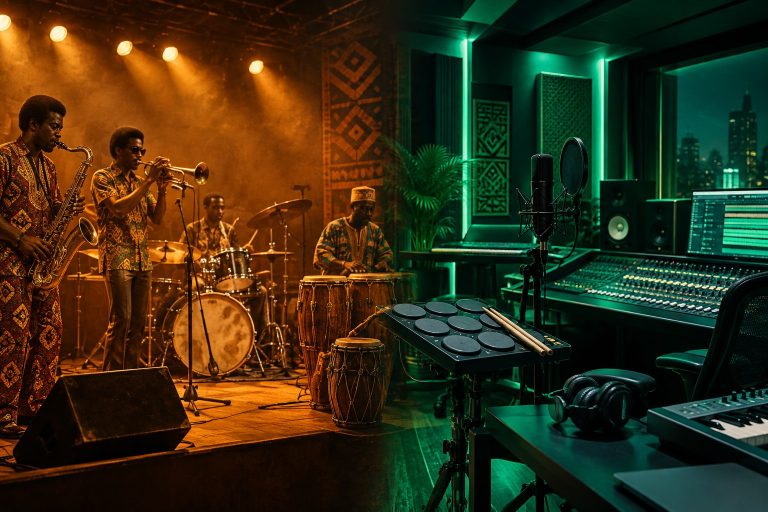
Highlife, for example, brought together local West African musical traditions with influences from brass bands and Western instrumentation. Afrobeat, developed by Fela Kuti and his collaborators, combined elements of jazz, funk, highlife and African rhythmic traditions into a powerful musical language.
Later, Nigerian popular music continued to absorb sounds from hip-hop, reggae, dancehall, R&B and electronic music.
Afrofusion emerged within this broader tradition of musical experimentation.
Burna Boy became particularly influential in defining the term through his recordings and public discussions of his artistic identity.
His music drew from Nigerian musical traditions, Caribbean sounds and American popular music, producing a style that could not always be adequately described by a single existing genre.
For Burna Boy, Afrofusion offered a way to describe those influences without being restricted to one category.
Although he popularised the name and has described himself as its creator, the broader practice of blending African and international music existed long before his career.
That distinction matters when discussing the history of the sound.
What Makes Afrofusion Different?
Afrofusion does not have a compulsory tempo, drum pattern or production arrangement.
Instead, several musical characteristics frequently appear in recordings associated with the style.
1. African Rhythmic Foundations
Rhythm is often central to Afrofusion.
Producers may incorporate percussion patterns inspired by West African popular music, traditional drumming or other African musical forms.
These rhythmic ideas can be combined with contemporary electronic drums, basslines and programmed percussion.
The result may feel familiar to Afrobeats listeners while introducing additional musical influences.
2. A Blend of International Genres
One defining characteristic of Afrofusion is its openness to musical influences.
A song might combine a dancehall-inspired rhythm with an Afrobeats melody, while another may incorporate R&B harmonies over African percussion.
Hip-hop delivery, reggae basslines, soul arrangements and electronic production can also contribute to the sound.
The important element is not how many genres appear in a song, but how naturally they work together.
3. Flexible Vocal Delivery
Afrofusion artists frequently move between singing, rhythmic chanting, melodic rap and conversational vocal styles.
An artist may begin a song with a relaxed melody, introduce a reggae-influenced vocal phrase and later shift into a more rhythmic delivery.
This flexibility allows performers to communicate different emotions without changing their overall musical identity.
4. Cultural Identity and Language
African cultural expression remains important to much of the music associated with Afrofusion.
Artists may use Nigerian Pidgin, Yoruba, Igbo, English or other languages in their recordings.
Lyrics can explore relationships, personal ambition, everyday struggles, cultural pride and social issues.
However, neither a particular language nor a particular lyrical subject is required for a song to be considered Afrofusion.
5. Creative Freedom
Perhaps the clearest feature of Afrofusion is creative freedom.
Unlike genres commonly identified through relatively consistent musical structures, Afrofusion often describes an artist’s approach to combining influences.
This gives musicians room to experiment with unexpected arrangements while retaining connections to African music.
Afrofusion vs Afrobeats: What Is the Difference?
Afrofusion and Afrobeats are closely connected, but they do not mean exactly the same thing.
Afrobeats is a broad term associated with contemporary popular music emerging primarily from Nigeria and Ghana, encompassing a variety of sounds, influences and artistic approaches.
Afrofusion places particular emphasis on combining African musical foundations with multiple genres.
An Afrofusion recording may therefore also be classified under the wider Afrobeats umbrella.
The distinction is not always obvious from the music alone because the categories overlap considerably.
For example, an artist blending Afrobeats percussion with reggae and R&B may identify the result as Afrofusion, while a streaming service might place the recording within an Afrobeats playlist.
Neither description automatically explains every aspect of the recording.
There is another important distinction: Afrobeat, without the final “s,” refers to the genre associated with Fela Kuti and his musical contemporaries.
Afrobeat and Afrobeats have different histories, even though contemporary musicians may draw inspiration from both.
Understanding these distinctions helps listeners appreciate the diversity of African music rather than treating every sound as one genre.
Burna Boy and the Popularisation of Afrofusion
Burna Boy is one of the most prominent artists associated with Afrofusion.
His approach combines musical influences from Nigeria, the Caribbean and elsewhere, alongside songwriting that frequently explores identity, ambition and lived experience.
His 2019 album African Giant offers a useful introduction.
Songs such as Anybody, On the Low and Gbona illustrate different aspects of his approach to rhythm, melody and vocal expression.
Across the album, listeners can hear connections between contemporary pop production, African musical traditions, reggae and other influences.
Burna Boy’s identification with Afrofusion has also contributed to a broader discussion about how African music should be classified internationally.
In a 2025 interview, he acknowledged the value of Afrobeats as a collective umbrella for African musicians, while explaining why he had previously resisted being placed within a single category.
This highlights an important point: artists can value a shared musical movement while also maintaining distinct creative identities.
Other Artists Exploring Afrofusion
Although Burna Boy is strongly associated with the term, he is not the only musician whose work has been described as Afrofusion.
BNXN
Nigerian singer BNXN has discussed his own approach to Afrofusion, particularly in connection with his 2023 album Sincerely, Benson.
The project brings together elements of dancehall, gospel, R&B, Amapiano and other styles, while maintaining his distinctive melodic delivery.
It demonstrates how different artists can explore Afrofusion without producing identical music.
The Wider Creative Landscape
Afrofusion also reflects a broader movement towards experimentation among contemporary African artists.
Musicians working in Afropop, alternative African music, R&B and other styles increasingly draw from multiple traditions.
However, blending genres alone does not mean an artist should automatically be labelled Afrofusion.
Where possible, the artist’s own description of their music should inform how it is presented.
Why Afrofusion Matters to African Music
Afrofusion matters because it demonstrates that African music can participate in international musical conversations without abandoning its cultural foundations.
It also challenges the idea that every African performer must fit into a single internationally recognised genre.
For independent artists, this creative flexibility can be particularly valuable.
A Nigerian musician might draw from highlife guitar patterns, contemporary R&B songwriting and dancehall percussion while developing an original sound.
Another artist may incorporate traditional vocal ideas into modern electronic production.
Both approaches can reflect meaningful experimentation, even when the artists choose different names for their music.
The emphasis should remain on originality, musical quality and honest representation of influences.
How to Recognise Afrofusion When Listening
If you are exploring Afrofusion for the first time, pay attention to the relationship between the different musical elements.
Listen to the percussion and bassline. Notice whether the rhythm draws from African popular music, Caribbean styles or a combination of traditions.
Then consider the vocals. Does the performer use R&B-style melodies, reggae-influenced phrasing or rhythmic delivery associated with hip-hop?
Finally, listen to the arrangement as a whole.
The clearest example of Afrofusion is not necessarily a song containing many different sounds. It is a recording in which different influences come together to create a coherent musical identity.
Remember that these observations are listening guides, not formal rules for deciding a song’s genre.
Afrofusion Songs and Albums Worth Exploring
A useful starting point is Burna Boy’s African Giant, particularly the songs Anybody, On the Low and Gbona.
Listeners can also explore BNXN’s Sincerely, Benson to hear another artist’s interpretation of contemporary Afrofusion.
Rather than searching for one rigid pattern, compare the vocal approaches, rhythmic arrangements and production choices across the recordings.
The differences between them help explain why Afrofusion is best understood as a flexible creative identity rather than a narrowly defined sound.
The Future of Afrofusion
Afrofusion’s direction will depend on the artists who continue to experiment with it.
New production technology, collaborations and exchanges between musical communities create opportunities for musicians to combine sounds in unexpected ways.
However, the future of Afrofusion is not simply about adding international influences to African music.
It is also about developing original ideas from existing African traditions and giving those ideas room to evolve.
As listeners become more familiar with the diversity of African music, there is an opportunity for more accurate descriptions of individual genres and artistic identities.
That would benefit both established performers and independent musicians developing their own creative paths.
Discover More African Music on Naijacraft
Understanding Afrofusion is one way to appreciate the creativity within contemporary African music.
For listeners, exploring different sounds can reveal artists, songwriting approaches and musical influences that might otherwise go unnoticed.
For independent creators, the lesson is equally important: a distinctive musical identity can emerge from thoughtful experimentation rather than imitation.
At Naijacraft, music discovery is about connecting listeners with African artists, recordings and creative stories.
Explore African music, discover independent talent and support the artists whose work connects cultures through sound.
Visit Naijacraft.com and continue your African music discovery journey.
Frequently Asked Questions About Afrofusion
Is Afrofusion the same as Afrobeats?
No. The terms overlap, but Afrofusion specifically emphasises the blending of African musical influences with other genres. Afrobeats is a broader umbrella associated with contemporary West African popular music.
Who created Afrofusion?
Burna Boy popularised the term and has described himself as its creator. However, African musicians were combining local and international musical influences long before the term became widely recognised.
Is Afrofusion a Nigerian music genre?
Afrofusion is strongly associated with Nigerian contemporary music, particularly Burna Boy. Its musical influences, however, extend beyond Nigeria and draw from African and international traditions.
Can independent artists make Afrofusion?
Yes. An independent musician can develop a sound influenced by African musical traditions and other genres. Artistic originality and a coherent approach matter more than following a predetermined formula.
What is the best way to discover Afrofusion?
Start with recordings by artists who identify with the style, including Burna Boy and BNXN. Listen to how their songs combine rhythms, melodies, vocals and production influences from different musical traditions.